Tuesday, 27 June 2023

Talia Caves – Part II: Ghosts and Embellishments.

 Talia Caves – Part II: 

Ghosts and Embellishments.


 In January 1961, Shirley and Bruce Baldwin were enjoying a seaside holiday on the Eyre Peninsula. Stopping at Talia, Bruce decided to get some photographs of the coastal cliffs and Talia caves. The film was developed and Bruce noticed an unusual figure standing in the ocean. He gave the negative to his friend Michael Leyson who had the image printed. Leyson submitted the print to be published in the book Haunted: The Book of Australian Ghost Stories, giving full credit to Bruce. However, Leyson claims that the author of the book disregarded the true story, misquoted Leyson and wrote a new story about the nurse that puts her reputation in disrepute. That book is by respected author John Pinkney, who, unfortunately, has since died and cannot defend himself against accusations of dishonesty, exaggeration, and embellishment.  

 Pinkney states in his book that Sister Millard’s death occurred in 1923. That her death was a murder, “A nurse became pregnant to a respected married man. He was so terrified of the scandal that might engulf him that he tried to solve the problem by hurling her from the high cliffs.’[1]

Researched and written by Allen Tiller © 2023

[1] John Pinkney, ‘Haunted: A Book of Australian Ghosts”, (2005), p. 22.

Tuesday, 20 June 2023

Talia Caves – Part I: Sister Doris Belle Millard

 Talia Caves – Part I: Sister Doris Belle Millard


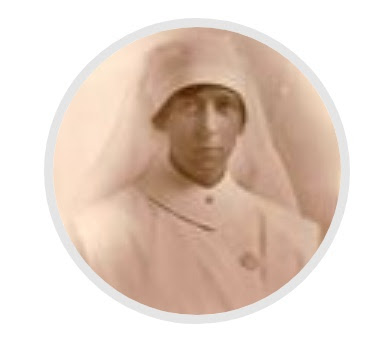
Sister Doris Millard set out with friends on Saturday 24 June 1928 from Streaky Bay to visit the Talia Caves. The little travelling party, consisting of Mr and Mrs J.B. Hastings, Mr and Mrs W.H. Brownrigg and Sister Millard camped overnight at Talia, and in the morning, Sister Millard suggested she might walk to the cliffs to take photos of the ocean.[1]
She walked to the cliffs with Mr Brownrigg reaching a narrow ledge that overhung a deep fissure in the rock. Brownrigg advised Millard not to walk on the ledge, but she replied, ‘If you can go there, I can”. Brownrigg walked a few steps away when he heard the rock crack. Turning, he saw Millard was gone., She had fallen ten meters in the raging waters below.

Brownrigg found his way down the cliff face to the waters below. He could see Millard trying to stay afloat in the raging waters as waves crashed over here, pulling her this way and that. He called out to her, and she got within a few feet of him, only to be washed away with the next wave.
Brownrigg watched as Millard would be pushed up into the narrow flume of the caves, then dashed back out onto nearby rocks. She lasted about fifteen minutes more until she disappeared from Brownrigg’s view.[2]

Sister Millard had recently resigned from her position as a nurse at Streaky Bay. Prior to that, she had worked at Broken Hill. Originally, she was from Prahran in Victoria.

News of the tragic circumstances of Sister Millard’s death spread quickly. Stan Emery, the local police officer of the region organised a service in the sister’s honour. Emery also hand-delivered a report on Millard’s parents in Melbourne.

The West Coast Sentinel (newspaper) organised a subscription list and raised over 60 pounds to erect a memorial to Sister Millard.[3] The memorial acted not only to honour the sister but to warn of the dangers of the cliff.
The memorial was unveiled on 25 November 1928.[4]


Next week: Talia Caves – Part II: Ghosts and Embellishments.

Researched and written by  Allen Tiller © 2023


[1] 'NURSE LOSES HER LIFE', Port Lincoln Times, (29 June 1928), p. 1.
[2] 'TERRIBLE DROWNING FATALITY.', West Coast Sentinel, (29 June 1928), p. 1.
[3] 'SISTER MILLARD MEMORIAL', Barrier Miner, (22 August 1928), p. 2.
[4] Sister D. B. Millard, Monument Australia (2022), https://monumentaustralia.org.au/themes/people/tragedy/display/51858-sister-d.-b.-millard.

Tuesday, 16 May 2023

A Haunting at Gawler's Pioneer Park.

A Haunting at Gawler's Pioneer Park. 


  Pioneer Park was in the original town plan for Gawler designed by Colonel William Light. The first recorded burial, Ellen Fielding, was in 1847. The cemetery saw a steady influx of deaths over the next 20 years until it was deemed unfit for service because it was too close to the town centre.

A year after opening, in 1847, a visiting journalist stated of the cemetery:

 “The Gawler Town Cemetery is still a disgrace to any civilized community. It not only is unfenced, and thus at the mercy of pigs and every other description of intrusive beast, but drays and horsemen make a thoroughfare in precincts which even the untutored savage holds tabooed!”


The intersection of Cowan Street with Murray Street was a small hill prior to 1870. It was eventually cut away to make the slope easier to navigate, which saw many burials along the western boundary of the cemetery being relocated to other areas within the grounds, and others relocated to Willaston Cemetery which was opened in 1866 to replace the Gawler Cemetery.

Many Gawler pioneer family members were buried in the cemetery, with 471 recorded burials in the short time it was used, and many of those burials are still present under the mound today. In 1933, the cemetery was declared parkland. A dedication service was held in October 1936, in which the cemetery was renamed Pioneer Park.

There have been reports of ghosts witnessed on the hill over the years, with one witness describing a man in old Victorian mourning clothing standing on the hill, looking out towards Cowan Street, while the witness watched the man from across the road, he faded away from sight.


Written and researched by Allen Tiller for the 'Haunted Gawler' talk at the Gawler National Trust Museum © 2023


Tuesday, 9 May 2023

The Pirate Bushrangers


The Pirate Bushrangers


This is a true story that starts with the Little Para Bushranger who terrorised Salisbury South Australia, was captured, and then sent to Port Arthur Penal Colony.

The Pirate Bushrangers is a true story of murder, robbery, and bloodshed across three Australian States. Patrick O’Connor and Henry Bradley were convicts sent to Port Arthur in Tasmania. Both were noted for increasingly bad behaviour and sent to the notorious penal colony on Norfolk Island to be broken. After serving their time in the infamous Norfolk penal colony, they were transported back to Tasmania within weeks of each other. They met again as 'ticket of leave' men and began a murderous rampage in northern Tasmania as bushrangers. They stole a ship at Circular Head van Diemen’s Land becoming pirates, sailed to Cape Schanck, and returned to bushranging in Victoria, where they were eventually caught and hung.
This is the story of the pirate bushrangers who for 40 days were two of the most brutal, bloodthirsty villains in southern Australia’s history.

Tuesday, 25 April 2023

Cyril Peter Tiller (1916 – 1946)

Cyril Peter Tiller (1916 – 1946) 


 Cyril Peter Tiller (1916 – 1946) was born in Mallala, South Australia. His preference was to use his middle name when introducing himself. Peter was the sixth child and the youngest son of William (1877- 1951) and Sophia Tiller (nee Forby, 1880 – 1964).

 His brothers and sisters were: Ethel May Tiller (1903–1972), Hurtle George Tiller (1905–1975) Edward Mervyn Tiller (1907–1985), Gladys Catherine Tiller (1910–1993), Dora Rowett Tiller (1913 – 1986), and Thelma Irene Tiller (1918–2003).

  In the 1930s, Peter moved to Monash, in the South Australian Riverland where he worked as a nurseryman.[1]  Peter enrolled with the A.I.F. for World War Two at the age of 24 on 8 July 1840. He was working as a labourer in Mallala at the time.
  Peter was discharged from military service on 12 November 1945 at 29 years and 8 months. He served in the Middle East (10 July 1941 – 16 March 1942) and at New Guinea (19 October 1944 – 20 August 1945). Peter achieved the rank of Private in the AIF. His War Badge No: 50965. His Service No. SN SX8696.[2]

  After his return from World War Two, Peter moved to Queensland to work as a nurseryman at Deagon. He met Helen Joyce Kratzmann (1913 – 1978), who had separated from her husband, Colin Jamieson. Kratzmann intended to divorce her husband and marry Peter. Peter and Helen had a son together, Peter George Tiller.

  At 6:58pm on February 28, 1946, Peter was hit by a train at Deagon Train Station, Queensland. Francis Glenwright, a fifteen-year-old, witnessed the train bearing down on Peter, but failed to warn him, as he was terrified of trains. He admitted during an inquest in Peter’s death that he saw Peter walking across the pedestrian crossing but froze with fear when he realised what was about to happen.[3] Glenwright stated that a train was leaving Deagon Station for Brisbane, and another was entering Deagon station from Brisbane. He watched the man enter the pedestrian crossing not realising a second train was bearing down on him. Glenwright closed his eyes when the train was a foot away from hitting Peter. He admitted that he had been hit by a train as a 10-year-old, and despite riding trains, they terrified him.[4]
It was stated during the inquest that the crew of the train were unaware they had struck a person until they were advised later.[5]
 Peter's partner, Helen Kratzmann was interviewed. She stated that Peter seemed to be losing his hearing, and that may have contributed to his not seeing the second train. She stated that Peter had left home that evening to cross the line to the local general store to purchase some butter.
Police Constable R. A. McNaught, of the Sandgate police, had the final word, stating,

Tiller had been carried 142 feet. His death was accidental, and no negligence could be attached to any person. Tiller apparently was watching the train pulling out from Deagon and did not see the train coming from Brisbane. The inquest was closed.[6]

Peter suffered from severe head injuries and a mutilated foot after being hit by the train at Deagon Station on February 28.[7] Peter died at Brisbane Hospital on 2 March 1946.[8] Peter’s funeral details were listed in the Courier Mail newspaper as follows,

TILLER, Cyril P.— The Funeral of Cyril Peter Tiller (Interstate Gardens), Braun St., Deagon, will leave the Funeral Chapel, Wickham St., Valley, This (Monday) Afternoon, at 2 o'clock, for Lutwyche Cemetery.      K. M. SMITH. B2695.[9]


Cyril Peter Tiller is my great-uncle. I lived in Queensland in the early 2000s and visited his grave at Lutwyche Cemetery. Peter’s photo is also on display in the Mallala Museum.


Researched and written by Allen Tiller © 2023

[1] Cyril Peter Tiller, Australian Electoral Rolls, 1903-1980, (1939).

[2] ‘Cyril Peter Tiller.’, National Archives of Australia, (2023), https://recordsearch.naa.gov.au/SearchNRetrieve/Interface/ViewImage.aspx?B=6348467.

[3] 'Too Scared to Warn of Danger', Townsville Daily Bulletin, (10 April 1946), p. 1.

[4] 'Boy Too Scared', Cairns Post, (10 April 1946), p. 5.

[5] 'Too Scared to Give Warning', Morning Bulletin, (10 April 1946), p. 4.

[6] 'Scared-Stiff Boy Unable to Warn', The Telegraph, (9 April 1946), p. 3.

[7] 'Here It Is in Brief', The Courier-Mail, (1 March 1946), p. 3

[8] 'Advertising', The Telegraph, (12 April 1946), p. 8.

[9] 'Family Notices', The Courier-Mail, (4 March 1946), p. 8.

Saturday, 15 April 2023

Haunted Salisbury South Australia

 Haunted Salisbury South Australia


Haunted Salisbury: South Australia is the culmination of many years of research into the haunted history of Salisbury, South Australia by award winning paranormal historian, Allen Tiller. In this book, Allen Tiller investigates the origins of historic local hauntings and crimes, Salisbury’s founding, and the people who shaped the City of Salisbury, some of whom, are now alleged to haunt the places they lived and worked.
Allen Tiller is a university educated, award-winning paranormal historian from Gawler, South Australia. He was a member of the cast of television show Haunting: Australia, and the best-selling author of The Haunts of Adelaide: Revised Edition, and Haunted Adelaide, the first book in this series about hauntings, history and crimes in Australia.


Purchase your copy here: BUY NOW


Tuesday, 11 April 2023

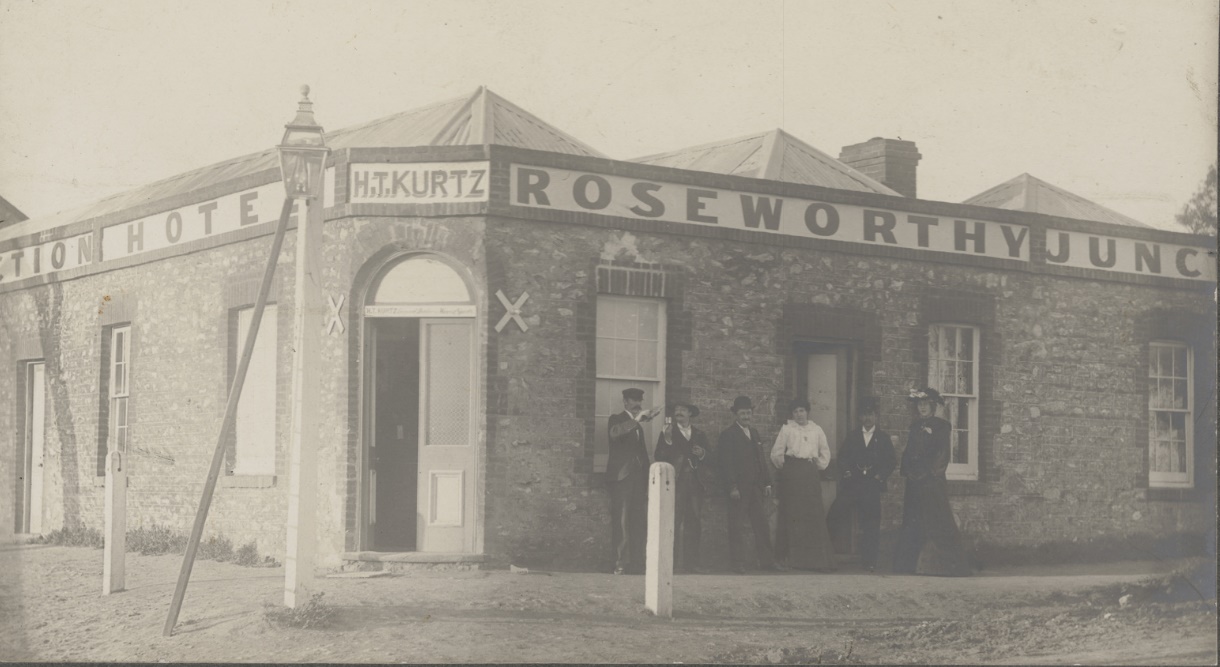
Lost Hotels: The Junction Hotel - Roseworthy.

Lost Hotels: The Junction Hotel - Roseworthy.


In 1867, plans were submitted to the Bench of Magistrates for licensing of a proposed hotel at Roseworthy. George Powning had his submission rejected as the board thought the dining room and bedrooms were too small for a hotel catering to the region at the time, especially one across from a train station.[1] Licensing for the hotel took almost a year to be approved. The first applications were presented in January 1867, but as the construction of the hotel needed to be completed the board did not think it appropriate to be open to service. It took a memorial signed by numerous people of the Roseworthy community to be presented to the licensing bench for approval to open be granted on 15 December 1868. The first publican was William Steed who ran the hotel from 1868 to 1902.[2]

As an interesting side note, the Bunyip newspaper printed in 1871 that the Roseworthy school was built through the efforts of Mr Steed, publican of the Junction Hotel, Roseworthy.[3]

H.T. Kurtz was the publican after Steed, having the hotel from 1903 to 1905. From 1906 to 1909, J. McFayden was the publican. E.A. Wickens was publican between 1910 and 1911, followed by Florence Jennings (1912), Chas. Nottle (1913) and then H.A. Payne 1914- 1916. Between 1917 and 1923 the publican was C. J. M. Lucas.[4]
 Mrs J Roberts was then publican between 1924 and 1926, followed by Mrs W. Roberts (1927) and William Roberts between 1928 and 1933. From 1936 until 1955, the publicans were Ethel Joyce and Colin Campbell Leitch. In December 1954 the Publican licensing board granted a transfer of the license to Colin Campbell Leitch from the Junction Hotel, Roseworthy to Leitch’s Hotel.[5]


The Junction Hotel license was transferred to Leitch’s Hotel, which was situated on Main North Road. The Hotel cost £20, 000 and was built at the junctions of roads that led to the Riverland, Gawler and Tanunda (pre-existing highways.) The hotel had 12 rooms with 6 bedrooms with ensuites and was designed by architects Walkley and Welbourn. It was built by the construction company J. Jenkins and Sons.[6]
The Hotel considered local farmers and the rising wine industry, with the News reporting that the hotel had a specialised round bar and a wine-tasting terrace. Steven Clark MP officially opened the new hotel on 18 March 1954.[7]

A Bunyip newspaper report stated that the ‘lounge accommodates 40 people and dining room 32…Outside the beer garden is set on a lawn, and the playground, with shell grit pit, includes a children’s slide and kanga-plane.”[8]


The former Junction Hotel was demolished in the 1960s.


Researched and written by Allen Tiller © 2023

Roseworthy Junction Hotel [B 45255], State Library of South Australia, (2023), https://collections.slsa.sa.gov.au/resource/B+45255


[1] 'BENCH OF MAGISTRATES.', South Australian Register, (24 September 1867), p. 3.

[2] J.L. Hoad, Hotels and Publicans in South Australia, (1986), p. 341.

[3] 'ROSEWORTHY SCHOOL DEMONSTRATION.', Bunyip, (2 December 1871), p. 3.

[4] J.L. Hoad, Hotels and Publicans in South Australia, (1986), p. 341.

[5] '2 hotels granted licences', News, (7 December 1954), p. 33.

[6] 'START ON HOTEL IN FORTNIGHT', News, (23 October 1953), p. 10.

[7] 'Bar outstanding', News, (15 December 1954), p. 37.

[8] 'NEW HOTEL HAS GALA OPENING.', Bunyip, (24 December 1954), p. 5.